
The technology delivering internet to your home can influence its availability, performance, installation requirements and consistency. Fiber, fixed wireless, 5G home internet and satellite internet can all provide high-speed connectivity, but they reach your home in very different ways.
This guide explains the major internet connection types and helps you determine which option may be the best fit for your home, business and location.
Why Your Internet Connection Type Matters
Your internet plan tells you how much speed and data you are buying. Your connection type describes how that service travels from the provider’s network to your property.
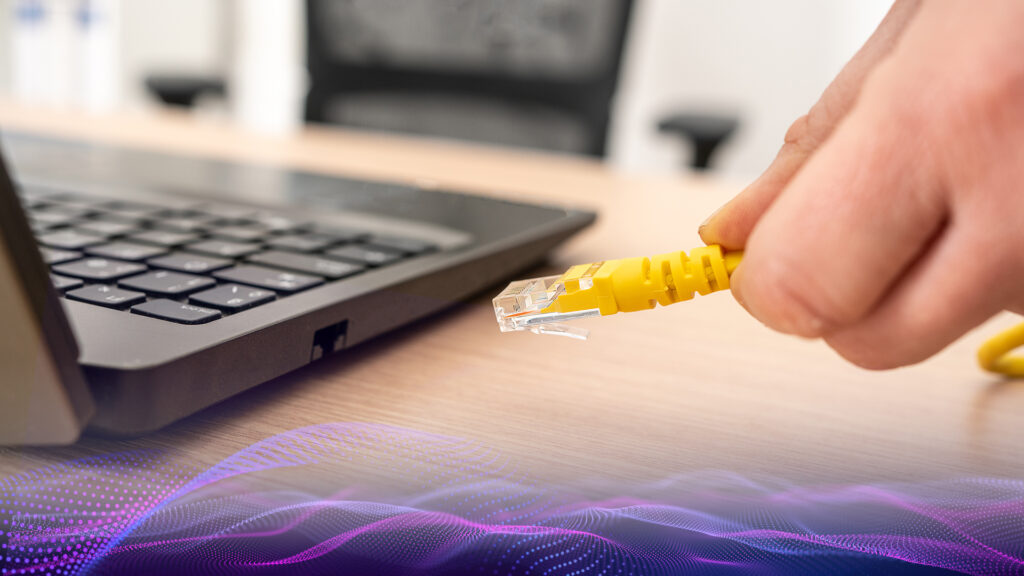
That difference matters because two plans advertising similar download speeds may not provide the same experience. Their upload speeds, latency, coverage, installation process and performance during busy periods can vary.
More than 96% of Canadian dwellings now have access to internet service meeting or exceeding the national universal service objective, but the technologies available still vary by address.
| Connection type | How it reaches your home | Key strength | Important consideration |
| Fiber internet | Data travels through fiber-optic cables | Very high capacity and strong upload performance | Not available at every address |
| Fixed wireless internet | Radio signal travels from a nearby tower to a receiver at the property | Extends high-speed internet without running cable to every home | Requires suitable coverage and, in some cases, line of sight |
| 5G home internet | A home gateway connects to a mobile 5G or LTE network | Similar setup to fixed wireless internet | Performance can depend on signal strength and network demand |
| Satellite internet | Data travels between a home dish and satellites in space | Can reach remote properties beyond terrestrial networks | Requires suitable dish placement and may have higher or more variable latency |
What Is Fiber Optic Internet?
Fiber internet uses thin strands of glass or plastic to transmit data as pulses of light. Because light can carry large amounts of information efficiently, fiber can provide very high download and upload speeds with substantial network capacity.
The CRTC describes fiber-optic internet as using light to carry data, allowing for faster speeds and greater bandwidth than many older technologies.
How Fiber Internet Works
With Fiber-to-the-Home, or FTTH, the fiber connection runs directly to the customer’s property. Inside the home, an optical network terminal converts the fiber signal into a connection that can be used by the router and household devices.
Benefits of Fiber Internet
Fiber is often a strong choice for households with demanding or simultaneous internet use. Its large capacity can support multiple people streaming, gaming, attending video meetings and uploading files at the same time.
It is also commonly associated with symmetrical or near-symmetrical plans, where upload speed is close to download speed. Strong upload performance is valuable for cloud backups, video production, security cameras and remote work.
Fiber internet is also one of the most reliable types of internet technologies because it is not affected by weather when it is buried underground.
Limitations of Fiber Internet
The main limitation is availability. Extending fiber requires physical network construction, so it may not yet reach every neighbourhood, acreage, or rural property.
Installation can also require an exterior connection point, access to the home and, in some cases, underground work. These requirements depend on the infrastructure already available at the property.
What Is Fixed Wireless Internet?
Fixed wireless internet delivers service from a provider’s tower or access point to a receiver installed at a fixed location, such as a home, farm or business. The receiver then connects to equipment inside the property, where a router distributes the connection over Wi-Fi or ethernet.
Unlike fiber, fixed wireless does not require a physical cable to be installed all the way from the network to every customer. This makes it an important high-speed internet option in rural and regional areas. The CRTC defines fixed wireless as service delivered between network towers and customers using radio waves, primarily at fixed locations.
How Fixed Wireless Internet Works
A provider connects its towers to a broader network, often using fiber or high-capacity wireless links. A radio installed at the customer’s property communicates with a nearby tower.
The quality of the connection can depend on several factors, including:
- Distance from the tower
- Available network capacity
- Radio technology
- Terrain and obstructions
- The customer’s equipment
- Signal quality at the property
Some fixed wireless systems require a clear line of sight between the receiver and the tower, while others can tolerate a degree of obstruction.
Benefits of Fixed Wireless Internet
Fixed wireless can bring high-speed service to areas where installing wired infrastructure to every property would take longer or cost significantly more. Installation is often less invasive because the provider does not need to trench a cable across the entire property.
It can also provide lower latency than connections that must travel much farther before reaching the wider internet, although actual latency depends on the provider, network, and location.
Limitations of Fixed Wireless Internet
Availability is still address specific. A provider may serve a community while being unable to connect a particular property because of distance, terrain or signal conditions.
Performance can also differ between providers because fixed wireless is a broad category covering many frequencies, network designs, and generations of equipment.
What Is 5G Home Internet?
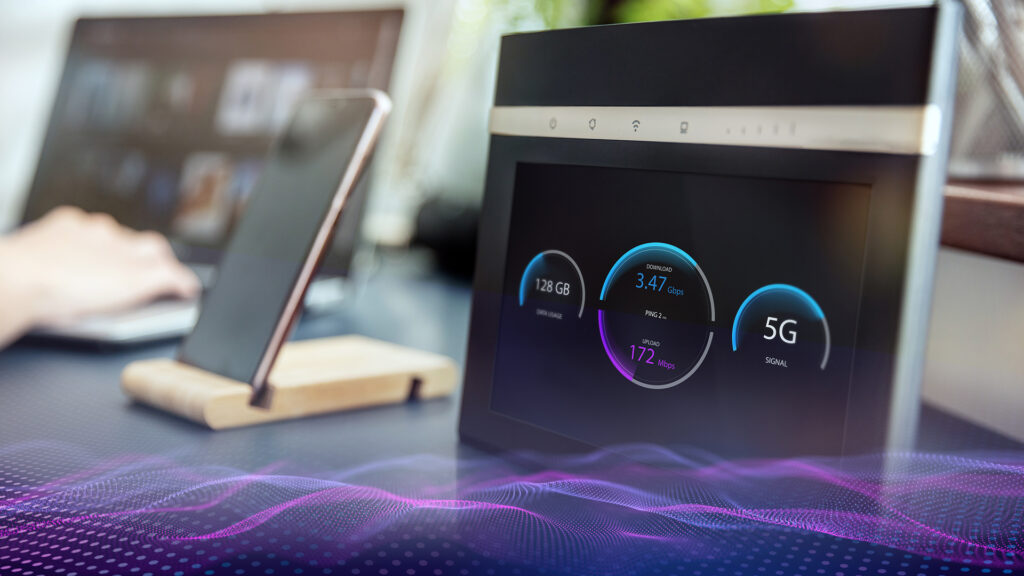
5G is a commonly-used term to describe the fifth generation of wireless cellular technology. It uses higher radio frequency bands and wider channels than 4G.
5G home internet uses a gateway installed inside or near the home to connect to a nearby mobile network. The gateway then creates a Wi-Fi network for household devices.
The system is similar to using cellular data on a phone, but the gateway is intended to remain at the service address and support the home’s regular internet use.
Benefits of 5G Home Internet
The biggest advantage is often convenience. Setup may be as simple as placing the gateway in an area with a strong signal and following instructions through an app.
It can be a practical alternative where wired internet options are limited but mobile coverage is strong. Canada’s connectivity strategy has also identified 5G-based fixed wireless as a way to expand last-mile connectivity without laying a cable to every property.
Limitations of 5G Home Internet
5G performance is highly dependent on location. Signal strength can change based on distance from the tower, building materials, terrain and where the gateway is placed inside the home.
Available capacity may also be shared with other users on the mobile network. As a result, performance can vary during periods of greater local demand.
The term “5G” does not automatically guarantee a specific speed. Users should compare the plan’s expected performance and test the service at their exact address rather than relying on the technology name alone.
Is 5G Home Internet the Same as Fixed Wireless?
5G home internet is a form of fixed wireless access, but not every fixed wireless connection uses 5G.
The term “fixed wireless” describes the broader delivery model: internet reaches a fixed property wirelessly instead of through a cable running all the way to the building. A 5G home internet service uses a provider’s mobile 5G or LTE network for that connection.
Other fixed wireless providers may use different licensed or unlicensed radio technologies, dedicated towers and equipment designed specifically for home or business broadband.
What Is Satellite Internet?
Satellite internet sends data between a dish at the customer’s property, satellites in orbit, and ground stations connected to the wider internet.
Traditional satellite systems generally use satellites positioned far above earth. Newer low-earth-orbit, or LEO, systems use groups of satellites operating closer to earth to reduce latency and increase performance.
How Satellite Internet Works
A satellite dish must be installed where it has a sufficiently clear view of the sky. The dish communicates with satellites passing overhead, which relay data through the provider’s network.
Satellite can cover locations that terrestrial networks cannot easily reach, making it a valuable option for remote homes, cabins, worksites, and mobile users.
Benefits of Satellite Internet
Its major advantage is geographic reach. Satellite service can connect properties beyond fiber, fixed wireless, and 5G cellular coverage.
Modern LEO services can also provide substantially lower latency than older geostationary satellite systems. For context, Starlink publishes expected land-based latency ranges of approximately 25 to 60 milliseconds, although performance varies by location and network conditions.
Limitations of Satellite Internet
The service requires suitable dish placement and an open view of the sky. Trees, structures, or other obstructions can interfere with the connection.
Performance may also fluctuate based on local capacity, obstructions, weather, equipment placement, and the number of customers using the network. Customers should also consider equipment costs, installation responsibilities, and available support when comparing satellite plans.
Fiber vs. Fixed Wireless vs. 5G vs. Satellite: Key Differences

Speed
Fiber generally offers the greatest capacity and highest potential speeds. Some advanced fixed wireless systems, like MCSnet’s GigAir, can also deliver fiber-like speeds, particularly where towers are supported by high-capacity fiber backhaul.
5G home internet can provide strong download performance where the signal and network capacity are good. Satellite speeds have improved considerably, but performance can vary by location and network demand.
The most useful comparison is not the highest speed each technology could theoretically achieve. It is the realistic plan available at your address, and made for your community.
Fiber typically provides the strongest upload options. Fixed wireless upload performance varies by technology and plan. Many 5G home and satellite plans are more download-heavy, with lower upload speeds than their advertised downloads.
Latency
Latency is the time it takes data to travel to its destination and return. Lower latency creates a more responsive experience for video calls, gaming, remote desktops, and cloud applications.
Fiber and well-designed terrestrial fixed wireless networks can provide low latency. 5G can also perform well when the customer has a strong connection to a nearby tower. LEO satellite has significantly reduced satellite latency, but the signal still follows a different and often longer network path.
Installation
Fiber usually requires a physical connection to the property and equipment inside the home. Fixed wireless normally requires an outdoor receiver and a signal test. A 5G gateway may be self-installed, depending on the techology. Satellite requires a dish with an appropriate view of the sky.
Professional installation is valuable when exterior equipment, cable routing, or signal alignment is involved.
Which Internet Connection Type Is Best?
There is no single connection type that is best for every property.
Choose fiber when it is available and your household needs high capacity, strong uploads or long-term scalability.
Consider fixed wireless when you need reliable high-speed service in a rural or regional area and a provider that can establish a strong connection to your property. Although, the newest fixed-wireless technology can provide fiber-like speeds and is available in more urban areas.
Consider 5G home internet when cellular coverage is strong, your usage is moderate, and you value simple setup.
Consider satellite internet when your property is beyond practical fiber, fixed wireless, or cellular coverage.
Explore MCSnet’s Advanced Internet Technologies Built for Rural Communities
MCSnet uses multiple technologies to bring reliable connection to rural properties. Depending on availability, customers may be served through Fiber Optics, Fixed Wireless or GigAir.
MCSnet is one of Canada’s largest privately-owned internet service providers and has built its own private network with more than 500 fixed wireless towers and 2,000 kilometres of buried transit fiber. That infrastructure helps connect homes, farms, communities and businesses across Northeastern Alberta and Western Saskatchewan.
MCSnet’s GigAir expands those options further. It uses high-capacity fiber or wireless connections to feed local towers, then sends the service wirelessly to a small receiver at the customer’s property. In supported communities, GigAir can provide fiber-like speeds of up to 940 Mbps without requiring the customer’s driveway or yard to be trenched.
Rather than asking customers to choose a technology without knowing what their property can support, MCSnet starts with the address. Available speeds and plans are then matched to the technology that can serve that location.
Learn more about MCSnet’s Internet Technologies
Check MCSnet availability at your address to find the internet technology and plan available for your home or business.
Frequently Asked Questions
What are the main types of internet connections?
The main home internet types include Fiber, cable, DSL, fixed wireless, 5G home internet and satellite. Availability varies by provider and address.
Is fiber better than fixed wireless internet?
Fiber generally provides greater capacity and stronger upload speeds, but advanced fixed wireless can deliver excellent performance where fiber has not reached the property. The better choice depends on the actual plans and infrastructure available at your address.
Is fixed wireless better than satellite internet?
Fixed wireless may offer a shorter terrestrial network path and professional local installation, while satellites can reach properties beyond tower-based coverage. The better option depends on signal availability, expected speeds, latency, support, and installation needs.
Is 5G home internet the same as satellite internet?
No. A 5G home gateway connects to a terrestrial mobile tower. Satellite internet connects a dish at the property to satellites in orbit.
Is 5G home internet the same as fixed wireless?
5G home internet is one type of fixed wireless access. However, many fixed wireless providers use dedicated broadband technologies and networks rather than a mobile 5G network.
Which internet connection has the fastest speeds?
Fiber typically has the highest capacity and can support very fast symmetrical service. However, actual speeds depend on the provider, plan and infrastructure available at the address. The newest fixed wireless technology can provide fiber-like speeds.
Which internet type has the lowest latency?
Fiber and terrestrial fixed wireless connections commonly provide low latency because data remains on ground-based networks. Actual results still depend on routing, congestion, equipment, and the service location.
Is satellite internet good for gaming?
Modern LEO satellites can support many online games, but latency and brief connection changes may be more noticeable in highly competitive or real-time games. Review the expected latency and performance at your location before choosing a plan.
Does fixed wireless require line of sight?
Some fixed wireless systems require a clear or near-clear path between the customer’s receiver and the provider’s tower. The provider may perform a signal test before completing installation.
Can fixed wireless provide fiber-like speeds?
Yes, some advanced fixed wireless technologies can provide fiber-like speeds when supported by sufficient spectrum, modern radios, and high-capacity backhaul. MCSnet’s GigAir, for example, can provide speeds up to 940 Mbps in supported areas.
How do I know which internet technology is available at my home?
Use the provider’s address-level availability checker. A general coverage map can identify the broader service area, but a property assessment may still be required to confirm the technology, signal, and available plan.
