
What is Broadband?
In the context of internet access, broadband is any high-speed internet access that is always on and faster than dial-up access or traditional analog services. To understand this better, we may need a simple explanation of the internet itself. The internet is essentially a vast network that connects computers all over the world. Through the internet, people can share information and communicate from anywhere in the world with an internet connection.
We all want to be connected to the internet, but there are many ways that we can get broadband services to our homes and businesses.
Fixed Wireless vs Satellite
Both fixed wireless and satellite services require the installation of a receiver or radio on the roof of a home or business that receives the wireless signal, and they both require a line of sight. The biggest difference between the two services is where the wireless signal is transmitted. The internet signal from a fixed wireless tower is usually within 15 km of the tower, whereas the signal from a satellite is reaching thousands of kilometres. The farther the distance the signal has to travel, the higher the latency — delay in the transmission of data.
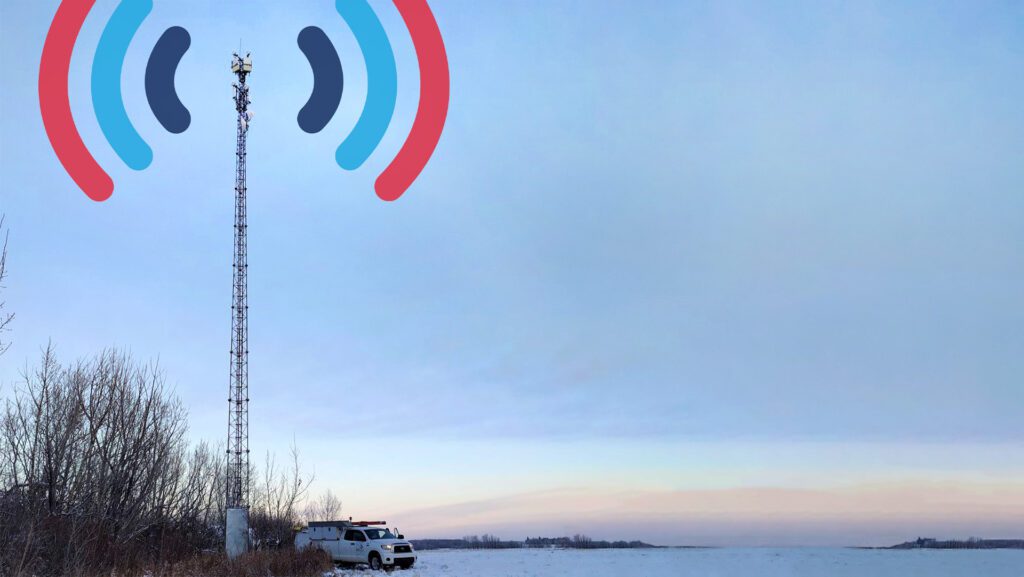
MCSnet has a network of over 500 fixed wireless towers throughout its network in order to provide reliable, high-speed internet to rural communities. The signal from the radio on your home or business needs a direct line of sight to a radio or access point on a tower. The signal uses radio frequency to transfer data, and different frequencies allow for more data to be transferred than others. In fact, the spectrum of different radio frequencies is licensed by the federal government in Canada, and we must pay to use it. You can learn more about spectrum management and telecommunications here.
Lack of access to some radio frequency spectrum is another reason why MCSnet started building its own transit fiber between its towers. By relying on the fiber optic network to transmit data between our towers instead of spectrum, we are able to improve our broadband capacity and improve our access to high-speed internet.
Building fiber optic connections between our towers also provides the backbone for more enhanced fixed wireless services. MCSnet continues to upgrade the radios on our towers and the radios on your home or business to provide faster fixed wireless speeds at no added cost to the end user.
Satellite internet is an alternative option for those who live in remote areas with no access to other services. Since satellite signals are connecting directly above a home or business, there aren’t as many obstructions in the line of sight. However, bad weather or other obstructions can become an issue.
Speed and price are also an issue for satellite internet service, and since there are a limited number of satellite internet providers, there’s not as much competition or options for customers. Depending on the provider, there may not be any customer installation and support when choosing satellite service.
Read more on why a rural-based internet provider is better than a space-based one.
Mobile Internet or 5G
Cell phone carriers can also provide internet to your home, business, or on-the-go through cellular-like plans. They also use a series of towers, but the way the data is transmitted is different from fixed wireless. According to techopedia.com, cellular refers to a network technology that facilitates mobile device communication over areas composed of cells and transceivers, which are also known as base stations or cell sites. In a cellular network, the most widely used mobile transceivers are mobile phones or cell phones. Since there is also a limited number of cell phone carriers that provide these services, there is a lack of competition.
Read more on how MCSnet’s GigAir stacks up against 5G techology.
Fiber vs Cable
Fiber optic internet and cable internet are usually only available in towns and cities because of the cost of building the technology.
Fiber optic internet transmits data by sending light along thin glass fibers. It is the gold standard of the internet as it stays connected in poor weather and elements, and it is scalable for future broadband needs. MCSnet began installing fiber optic strands between our network of fixed wireless towers in 2015. By using this scalable technology to interconnect our network, we’re able to provide a variety of broadband connectivity options to meet the needs of rural communities.
The downside of fiber optic internet is the costliness and timeliness of trenching fiber optic cables to each home and business. If we are already trenching fiber to a tower in your community, it makes sense to invest in a Custom Fiber build to your business or municipal building, but trenching fiber optic cables to every home in a county or municipal district is extremely costly and unrealistic.
MCSnet also provides Fiber services in some communities. You can learn more about where these services are provided and the packages available here.
Cable or DSL internet lacks the full-speed potential and reliability of fiber optic services, but it is more widely available in towns and cities where cable TV is traditionally available. Using coaxial cables or phone lines, data is transmitted by sending electricity over copper wires. Copper wire doesn’t have the broadband capacity of fiber optic strands, but it is more cost-effective to install and has been around for a lot longer than fiber optic technology.
If there is ever a question whether you should take Fiber-to-the-Home services when they are offered to you over your existing satellite service, find the answers here.
Millimeter Wave
MCSnet’s GigAir uses Millimeter Wave technology and the power of its fiber to the tower to launch fiber-like speeds wirelessly throughout densely-populated communities, such as hamlets, villages, towns, and cities. This is one of the newest and fastest wireless technologies available today, and MCSnet is proud to be a pioneer in this realm. The Millimeter Wave technology uses short-range 60 Ghz radio frequencies to create a mesh network within your community, providing top up and down internet speeds of 1000 Mbps without the time and money it takes to trench fiber. You can learn more about the technology here.
Learn more about how MCSnet’s GigAir is taking on other fiber internet providers.
DSL
DSL (Digital Subscriber Line) is a high-speed broadband internet technology that transmits digital data over existing copper telephone lines. Unlike older dial-up connections, DSL operates at higher frequencies than landline voice calls, allowing users to surf the web and make phone calls simultaneously on the same physical line. Signal strength and performance degrade as the distance between the customer’s location and the central office increases.
Broadband 101 Recap
| Internet Type | How it Works |
| Fixed Wireless | Transmission by tower to fixed points, using wireless spectrum. Options for transit fiber backhaul. Opportunity for fiber-like speeds with newest technology. |
| 5G | Transmission by tower for cellular networks that succeed 4G LTE. A receiver is mounted at the premise and connects to towers nearby. |
| Fiber | Transmission over fiber optic cables; symmetrical connections (same upload and download speed). Costly to deploy, but scalable for future broadband technology and the fastest speeds. |
| Millimeter Wave | Transmission using 60 Ghz radios that can be configured for Point-to-Point (PTP) or mesh modes; symmetrical connections. More cost effective and timely to deploy. Requires fiber optic backbone and densely-populated areas to provide fiber-like speeds. |
| Cable | Transmission over copper telephone lines or coaxial cable. Traditionally available in densely-populated communities. Speeds over coaxial cable are faster than DSL. |
| DSL | Transmission over existing copper telephone lines. Operates at higher frequencies than landline voice calls, but slower speeds than fiber and cable. |
| Satellite | Transmission is routed by low- or high-earth orbit satellites and a receiver dish that picks up the signal; similar to satellite TV. Slower latency speeds due to distance data is travelling. |
What is Wi-Fi?
Wi-Fi is short for Wireless Fidelity. Similar to a fixed wireless network, Wi-Fi uses a radio frequency signal to connect your devices to the internet. This wireless signal is created by a router or modem connected to a broadband service so that computers, printers, and smartphones can connect to each other and to the internet. This is why it is important to place your router in a central location and away from enclosed spaces so that you can access your Wi-Fi throughout your home. It is also important to note that router technology is continually changing and the lifespan of a single router is about five years. It may be time to upgrade your router if the Wi-Fi in your home isn’t up to par. You can learn more about MCSnet Wi-Fi Routers here.
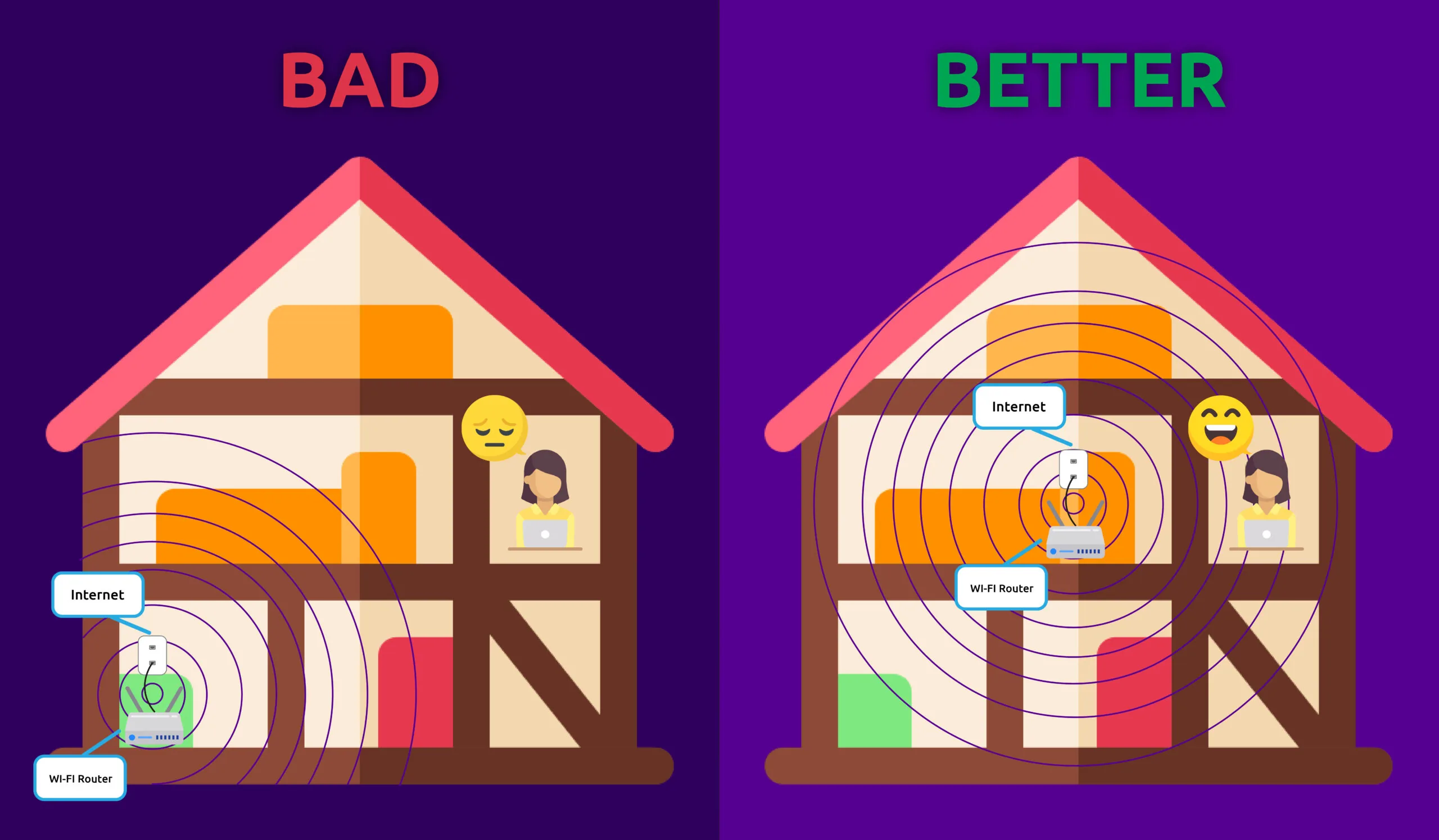
The same principle of placing the router in a good location applies when we create an MCSnet Wi-Fi Hotspot in a public facility. For larger facilities, we need to install numerous routers or access points throughout the building so that you can access the free Wi-Fi no matter where you are in the community facility.
Enhance Your Internet
There are many ways to get the internet to your home or business, and MCSnet uses a variety of these technologies to continuously enhance high-speed internet for rural customers. If you are looking for an internet solution for your home or business, contact us to find out what is available to you.
To assist you in making a decision about the best internet connection for you, read our blog on different internet connection types.
